

Playing cards are an important part of entertainment and gaming culture. Size and dimensions of playing cards play a crucial role in usability, from classic poker night to professional casino games and collectable decks. Whether you’re designing custom cards, manufacturing a deck or just curious about card measurements. Understanding the dimensions of standard playing cards is important.
In this guide, we’ll explore the common play card sizes and how to choose the right dimensions for your custom card deck.
Why Playing Card Dimensions Matter?
The dimensions of a playing card are not random. They need to be carefully designed to maintain the best balance between comfort and functionality. Card sizes affect various factors, such as how easily the deck can be shuffled and precisely how the graphics appear on the card surface.
Choosing the accurate size ensures that the card works properly during gameplay. Casinos and professional card players also depend on the standardized dimensions because consistency enhances the handling speed and fairness. Card dimensions also influence the printing quality, packaging design, and overall product presentation.
Standard Playing Card Size
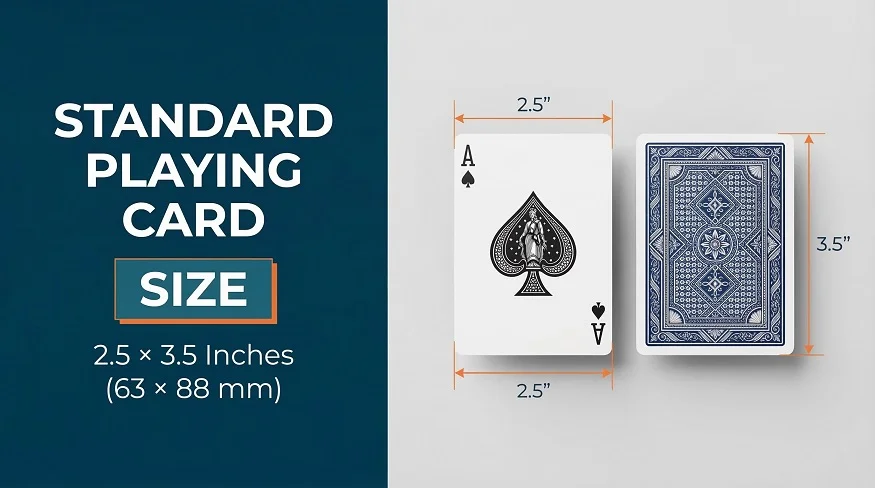
Commonly used playing card sizes internationally are known as poker size.
Poker cards measure approximately 2.5 inches by 3.5 inches (63 mm × 88 mm).
Dimensions are the industry standard for different card games because they offer a perfect balance of visibility and usability. Slightly wider design makes these cards easier to read when placed on the table. This is the reason poker tournaments and casinos usually prefer this format.
Poker-sized cards are also ideal for custom card designs because their larger surface area provides more space for graphics, logos, and detailed artwork.
Bridge Card Size
Bridge size is another popular playing card dimension.
Bridge cards are usually measured 2.25 inches by 3.5 inches (57 mm × 88 mm).
Height of bridge cards remains the same as the poker cards, but the width is slightly narrower. Players can comfortably hold more cards in this design. Different games, such as bridge or rummy, require managing larger card hands therefore, a narrower format makes gameplay easier.
Bridge-sized cards are usually preferred by experienced card players because they value easier card handling during complex games.
Other Playing Card Sizes
Although poker and bridge sizes are popular, several other playing card dimensions are used for different purposes.
Mini Playing Cards
Mini cards are smaller in size than traditional playing cards. The size is around 1.75 inches by 2.5 inches. These compact decks are usually used for travel games, novelty products and promotional items. Mini cards are easier to carry due to their small sizes, but at the same time, they are difficult to read during gameplay.
Jumbo Playing Cards
Jumbo cards, as the name suggests, are larger than standard cards. These oversized decks are usually used for teaching card games, magic performances and visual demonstrations. They are popular as party games and novelty products.
Tarot Card Size
Tarot cards are used for fortune-telling and spiritual readings. These cards are larger than the traditional playing cards. They commonly measure 2.75 inches by 4.75 inches. Extra space on these cards allows for more detailed illustrations and symbolism. Both illustrations and symbolism are important for tarot readings.
Thickness and Card Stock
Dimensions are important to determine the width and height of playing cards. Thickness of the card is also important. Thickness affects the flexibility, durability and overall feel. Standards playing cards are printed on cardstock ranging from 280 GSM to 330 GSM.
High-quality decks may also include protective coatings, such as a linen finish or matte lamination. These coatings are important for improving card durability and providing a better grip during dealing and shuffling.
Choosing the Right Card Size for Custom Decks
If you’re creating Custom Playing Cards, choosing the right size is the most important decision. Ideal dimensions of these cards depend on how they will be used. For traditional card games like blackjack, casino games, and poker, the secure choice is poker-sized cards. Players are already familiar with this format.
Bridge-size cards offer a better user experience for games that require players to hold large hands. If your goal is to create promotional products, novelty items, and collectable decks, custom sizes may be appropriate for the brand concept.
Designers should also consider printing requirements. Large cards are allowed for more detailed artwork, while small cards require simplified designs to maintain readability.
Printing and Design Considerations
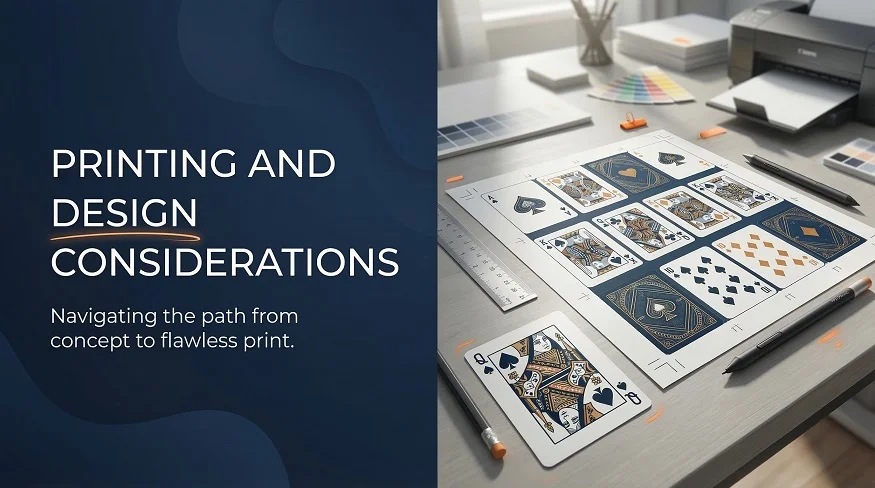
While designing playing cards for production, several factors need to be considered beyond the dimensions.
Bleed Area
Bleed area of the card ensures that the color and artwork are extended slightly beyond the trim line. This prevents white edges from forming after cutting during printing.
Safe Margins
Important design elements such as icons, numbers, and logos need to stay within the safe margins to avoid being trimmed off.
Resolution and Artwork
High-resolution artwork ensures crisp printing. Professional printing companies recommend designing playing cards at 300 dpi for the best results.
Finish Options
Different finishes can enhance both the durability and the appearance of the cards. Popular finishing options include:
- Matte finish
- Gloss coating
- Linen texture
- UV coating
These exclusive finishes improve card handling and protect the printed surface.
Packaging for Playing Cards
Packaging a card deck is just as important as the cards themselves. Most playing cards are packed in tuck boxes. Tuck Boxes are compact, lightweight and easy to store. Moreover, custom tuck boxes can be printed with unique branding, creative artwork and premium finishes such as foil stamping or embossing. It helps brands in creating a premium appearance while protecting the cards inside.
Rigid Boxes or magnetic closure boxes are used for premium decks and collectors.
Wrapping Up
Playing card dimensions may seem like some minor detail, but they have a significant impact on gameplay and design quality. Commonly used designs include poker and bridge sizes. Both are a perfect balance of comfort and functionality.
Businesses need to understand the card dimensions, printing standards, thickness and packaging options to create custom decks. All of these factors are important to produce a high-quality product. Whether you are designing a custom deck for any purpose, e.g., promotional use, professional gaming, or entertainment, choosing the right card size helps ensure an enjoyable playing experience.


