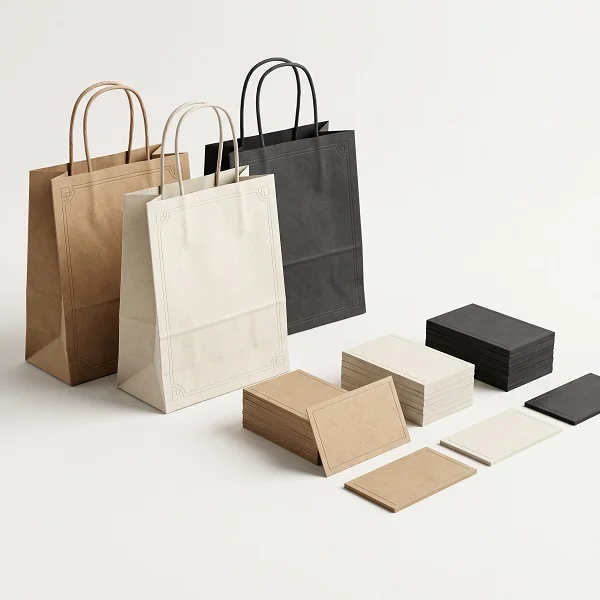
Strong business identity helps your customers to identify your business and understand what makes it different. That’s everything from logo design and brand colors through to corporate stationery and custom packaging branding. A consistent visual brand identity builds trust, creates brand awareness and underpins your market position.
What Is Business Identity and Why Does It Matter?
Business identity combines the visual elements, messaging, and design standards that communicate what your business is. It is your logo, typeface, color scheme, packaging, stationery and all of your marketing materials. That’s what puts your business out there and what the customer sees when they engage with you.
A good corporate identity does far more than just make your company look professional. It creates a consistent experience that the customer can identify with across your website, your social media channels, your retail environment and your product packaging. An effective business identity can help you:
Improve brand recognition: Make your business easier to identify across different platforms.
Build customer trust: Present a professional and consistent image at every interaction.
Strengthen brand positioning: Communicate your unique value and distinguish your business from competitors.
Support brand awareness: Use recognizable design elements across marketing channels.
Create brand consistency: Maintain the same visual style and messaging across packaging and promotional materials.
For businesses selling physical products, packaging is of the utmost importance. You come into contact with the packaging long before you even come into contact with the product itself. A clear, consistent design can make that first impression stick.
Essential Elements of a Professional Business Identity
A good brand strategy combines visual design with clear communication. Every element of the brand should reflect the values of the business, the values of the target market and the position of the business in the market.
1. Business Logo and Custom Logo Design
Your logo is one of the most important elements of your brand identity. It has to be distinctive, it has to be readable and it has to be appropriate for all sorts of applications. Custom logo design enables you to create a visual identity that reflects the character of your business. You need to think about how the logo will look at various sizes and on various materials prior to finalizing the design.
2. Brand Colors and Typography
Brand colors affect how customers perceive your business, and typography affects readability and your brand’s visual character. The right combination of colors and fonts creates a distinct style which can be recognized across all your digital and print materials.
Your brand guidelines should specify the approved colors, font families, logo variations, spacing and usage. They’re there to ensure that everyone from the staff right through to the designers and the packaging people are all working to the same standard and the brand looks consistent.
3. Brand Messaging and Personality
Visual identity design works best when underpinned by clear brand messaging. Your tone of voice, key messages, product copy and company values all need to be communicating the same promise to your customer.
Define your brand personality prior to creating any marketing content. A luxury business for instance might want to focus on craftsmanship and exclusivity. An everyday consumer brand would probably want to focus on convenience, value and reliability.
4. Corporate Stationery and Marketing Materials
Business stationery design is how you extend your brand into the day to day business communications. Your Business Cards, your letterhead, your envelopes, your presentation folders and all your corporate stationery should be designed in the same way as your website and your packaging.
Marketing materials design should be consistent in terms of color, typeface, imagery and messaging. That consistency will ensure a unified look and feel across all brochures, leaflets, catalogues, promotional material and online campaigns.
How Packaging Strengthens Your Brand Identity?
Packaging is more than just a protective covering for the product. It’s a practical branding tool in its own right, communicating quality, aiding product recognition and creating a distinct retail presence. Packaging brand identity is about linking your visual brand with the actual product experience. If your packaging is in line with your overall brand guidelines then your customers can easily identify your product.
Packaging Design for Brand Recognition
Consistent packaging enables the customer to link the individual product with the business. The use of the same approved logos, colors, typeface and graphics creates a familiar visual pattern.
Packaging design for brand recognition is very useful if you’re selling a range of products or operating across a number of different retail channels. It enables the various product lines to be linked together in some way without all the packaging looking the same. Consider these factors when planning packaging:
- Product dimensions, weight, and protection requirements.
- Suitable packaging materials and structural designs.
- Logo placement, readability, and print quality.
- Brand colors and typography across product variations.
- Unboxing experience and retail presentation.
- Relevant product information and applicable labeling requirements.
A good packaging system strikes a balance between visual appeal and practical performance. It needs to protect the product, contain the right information and in some cases will need to help to build your brand.
Business Identity vs. Brand Image: What Is the Difference?
Business identity and brand image are related but are not the same thing. Business identity is the stuff you create and control yourself. Brand image is how your customers actually see your business as a result of their experience of it.
Your brand strategy is the thing that brings those two areas together. Consistent design, reliable products and clear communication can all go a long way to help build a positive image of your business in the eyes of your customer.
However visual consistency in itself won’t build a good reputation. Customer service, product performance, honest claims and reliable delivery are all equally important in terms of how people perceive your business.
How to Develop a Memorable Business Identity
Building a distinct identity is about planning, not just picking attractive colors and coming up with a logo. Here’s how you go about establishing a clear and consistent brand presence.
Step 1: Define Your Brand Positioning
Work out who your audience is, who your competitors are, what your key benefits are and what your unique selling point is. What do you want the customer to remember about your business and why should they pick your product?
Step 2: Develop Your Visual Identity
Create a logo, a color palette, a typeface system and all the associated graphics. They need to be in keeping with your brand personality and work.
Step 3: Establish Brand Guidelines
Document all your logo variations, color values, font choices, image style, messaging and packaging rules. Having clear guidelines in place will go a long way to minimizing design inconsistencies as your business grows.
Step 4: Apply Your Identity Across Every Touchpoint
Use the same core identity across your website, social media, business stationery, marketing materials, labels and your product packaging. Adapt the design to the format in which it’s being used, but ensure that the core brand identity is recognizable.
Step 5: Measure Brand Recognition
Look at the customer feedback, the repeat purchases, the website engagement, the branded search and the packaging performance. All of those can tell you whether your brand messaging is actually getting to the audience.
Custom Business Identity Solutions for Growing Brands
A professional business identity gives your company a clear direction in terms of how it looks and a consistent way of communicating with your customers. Everything from your logo, stationery and printed materials through to your packaging should be in line with the same brand strategy.
At PackagingXpert packaging design can be a practical extension of your visual identity. If you take your box design and structure, your printing, your materials and your finishes and bring them in line with your brand guidelines then you can have packaging that presents your product in a professional way and is in fact a genuine extension of your brand.
Ready to strengthen your packaging brand identity? Get in touch with our team of professionals and find the options align with your product and business goals.