Cereal boxes are among the most recognizable packaging solutions in the world. The tall, slim structure is immediately recognizable in all places, from grocery stores to kitchen cabinets. But have you ever thought about what the height of cereal boxes is and why they are designed in this style?
Understanding the dimensions of a cereal box is not just important for consumers to organize their pantries. It also plays an important role in custom packaging design, branding and shipping. Let’s take a close look at the standard size of a cereal box packaging and the reason behind it. What Is the Standard Height of a Cereal Box?
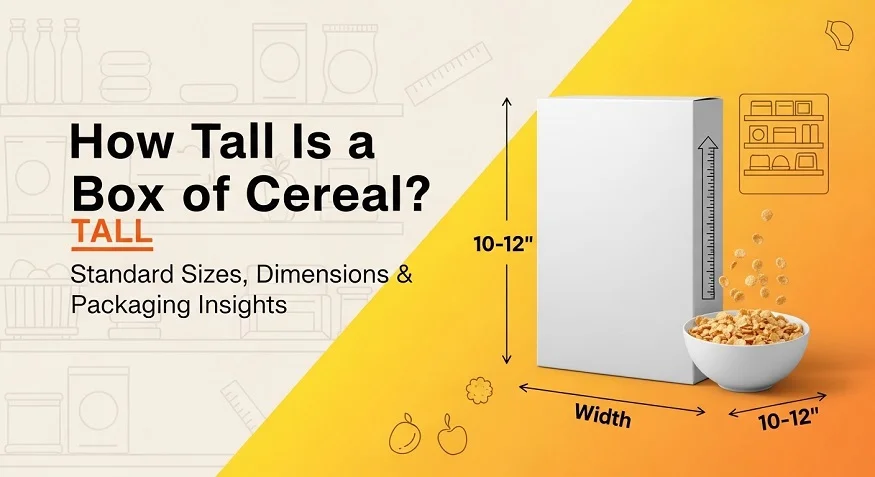
In the United States, the ideal height of cereal boxes is measured between 10 and 12 inches. This height range has now become the industry standard because it works well across all retail shelves, shipping processes, and consumer storage. Besides the height, some cereal boxes are found around 7 – 8 inches wide, and about 2 -3 inches deep. It gives a familiar rectangular shape that is easier to stack, handle and display.
Size consistency is not accidental. Major cereal brands follow similar sizing guidelines to ensure their products seamlessly fit into the retail environment.
Why Cereal Boxes Are Designed This Way?
Cereal Box Dimensions are carefully and strategically planned to balance functionality with marketing. One of the major reasons behind this height is perfect shelf compatibility. Grocery stores are designed with uniform shelving, and it is important for the cereal boxes to fit perfectly while maximizing vertical space.
At the same time, the tall front panel of boxes offers a perfect branding canvas. Brands find this space perfect to display bold colors, product illustrations and important information to engage customers. Visual impact of product makes a clear difference in customers’ purchase decisions.
We can’t ignore the logistical benefits of standardized box dimensions. It simplifies the stacking, packaging and shipping. Consistency makes it easier to pack more efficiently and secure arrangements on pallets. It reduces the overall cost and also reduces the risk of damage.
Variations in Cereal Box Sizes
Different product types and market requirements need noticeable variations in cereal box sizes. For instance, family-size cereal boxes are usually taller and slight wider than the standard boxes. They are designed for households and that frequently consume cereals. Therefore, they want large quantities.
On the other hand, mini cereal boxes are smaller and compact. They are often used in hotels and travel settings due to the convenience of more volume.
Why the Cereal Box Isn’t Fully Filled?
One thing that usually surprises consumers is that cereal boxes are not filled to the top. There is a cereal sealed in a plastic bag, leaving some empty space around it.
This space serves a functional purpose, as it protects the cereal from breaking during shipping and handling purposes. Without this space, the product would be delivered in damaged, crumbly form. It also allows room for the inner bag to be sealed properly.
Besides all these points, if we talk about the regulatory standpoint, the packaging must not be misleading. The empty space on the box is justified by the practical requirements, including product protection.
Materials Used in Cereal Packaging
Cereal Boxes are usually manufactured from paperboard because it is lightweight, sturdy and fully functional. It provides protection to the product and offer a smooth surface for premium quality printing.
It is important because packaging plays a crucial role in brand identity. Vibrant colors, detailed graphics, and clear labeling demand the print-friendly feature of paperboard.
Inside the paperboard box, there is a plastic liner that is used to keep the cereal fresh. Brands are also now exploring some sustainable alternatives to reduce environmental impact. Shifting towards the eco-friendly packaging is increasing in today’s market.
Why Dimensions Matter in the Packaging Industry?
Cereal box dimensions is more than just a number for food packaging businesses. They directly impact the design accuracy, production efficiency and cost management. Correct packaging size ensures a secure product fit, reducing movement and minimizing damage during shipping. It also helps to avoid unnecessary material usage.
The size and shape of the box determine how the product grabs attention on the shelf. A well-designed cereal box can immediately communicate the quality standards and build consumer trust.
How to Measure a Cereal Box Properly?
If you’re working in packaging or product design, measurement accuracy is important. The height of the cereal box is measured from the base to top of the box, while the width is taken across the front panel and the depth is measured along the side. In the United States, using inches is standard practice, especially in retail packaging solutions.
Modern Trends in Cereal Box Packaging
Today, brands are focused on sustainable, Simple and Engaging Packaging solutions along with basic functionalities. Eco-friendly materials are now widely used by companies focused on reducing their environmental footprint. At the same time, minimalist designs are also popular, which give a clean and trendy look to attract today’s consumers.
Brands are also integrating some interactive elements, including QR codes that allow customers to directly connect with digital content through packaging. These innovations show how a traditional product can be updated according to the changing expectations of the market.
Wrapping Up
The standard height of cereal boxes reflects a well-balanced approach to the packaging design. It efficiently supports the storage, strong shelf presence and reliable product protection. The sizes may vary according to the product type.
It is important for the businesses in the packaging space to understand all of these details. Because the right box size is important not just for protecting the product but also for improving branding and reducing costs. It significantly improves the overall experience of customers.