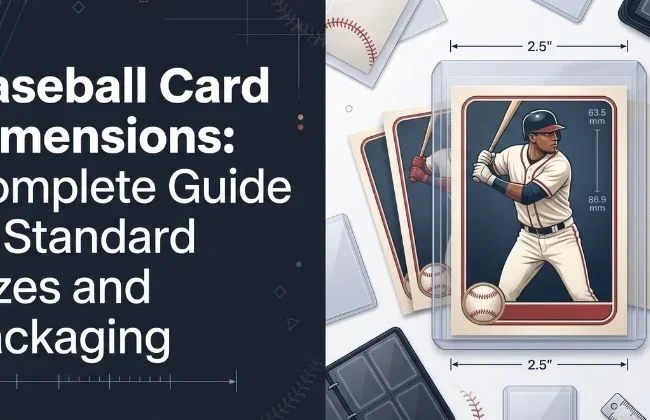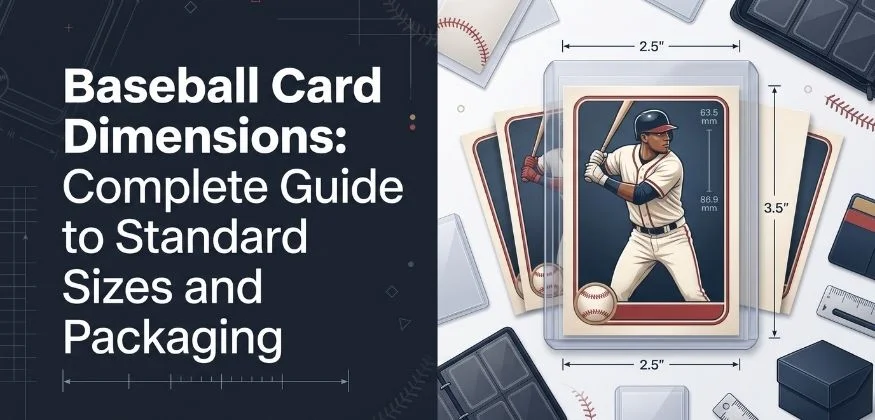
Baseball cards have been the favorite collectible for generations. They attract sports enthusiasts, investors, and hobby collectors. Whether you’re creating custom baseball cards, designing packaging or making a collection, understanding the correct baseball card dimensions is important. Right size ensures compatibility with storage sleeves, display cases, binders, and shipping boxes.
This guide will share standard baseball card sizes, historical variations ad card thickness. Moreover, packaging considerations also help businesses and collectors to make decisions.
What Are the Standard Baseball Card Dimensions?
The standard size of a modern baseball card is:
- Width: 2.5 inches (63.5 mm)
- Height: 3.5 inches (88.9 mm)
These dimensions are the industrial standards for the major trading card manufacturers. They are widely accepted throughout the collectibles market. Standard-sized cards perfectly fit into the protective sleeves, top leaders, binders, and grading holders.
Baseball Card Size Conversion Chart
Measurement Unit Size
Inches 2.5″ × 3.5″
Millimeters 63.5 mm × 88.9 mm
Centimeters 6.35 cm × 8.89 cm
Understanding these measurements is particularly important while designing custom baseball cards.
Why Baseball Card Dimensions Matter?
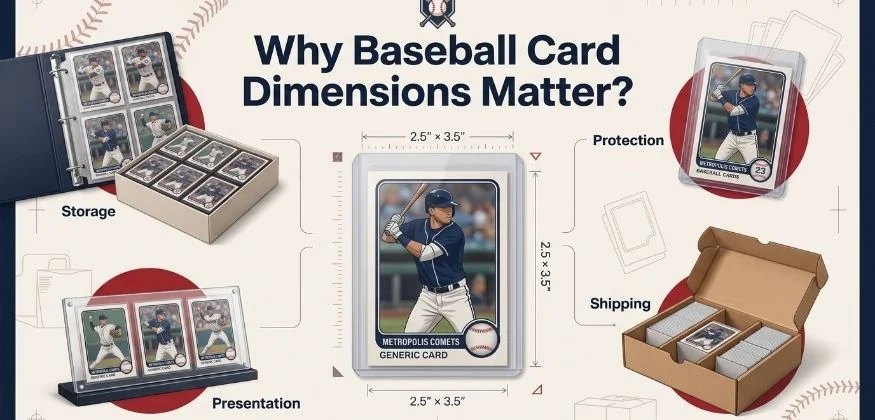
The size of a baseball card affects much more than its appearance. Standard dimensions offers several benefits, including:
Easy Storage
Most storage products, including binders, penny sleeves, and magnetic holders, are manufactured specifically for standard-sized baseball cards. Cards with unusual dimensions may require custom storage solutions.
Better Protection
Cards that fit properly inside protective cases are less likely to suffer damage from bending, moisture, dust, or handling.
Professional Presentation
Collectors appreciate uniformity. Standard-sized cards create a cleaner display and maintain consistency throughout a collection.
Simplified Shipping
If card dimensions follow industry standards, custom packaging manufacturers can design accurate inserts and boxes.
History of Baseball Card Sizes
Although modern baseball cards follow a standard size, this wasn’t always the case.
In earlier times, baseball cards from the nineteenth and early twentieth centuries were smaller in size. Their sizes were varied significantly between manufacturers. For example, tobacco cards were narrower than the trading cards we use today.
With the passage of time, the baseball card industry matured, and manufacturers gradually adopted a consistent format that improved product efficiency. It also has improved collector convenience. By the mid-1950s, the standard size 2.5″ x 3.5″ became the preferred standard.
Common Baseball Card Size Variations
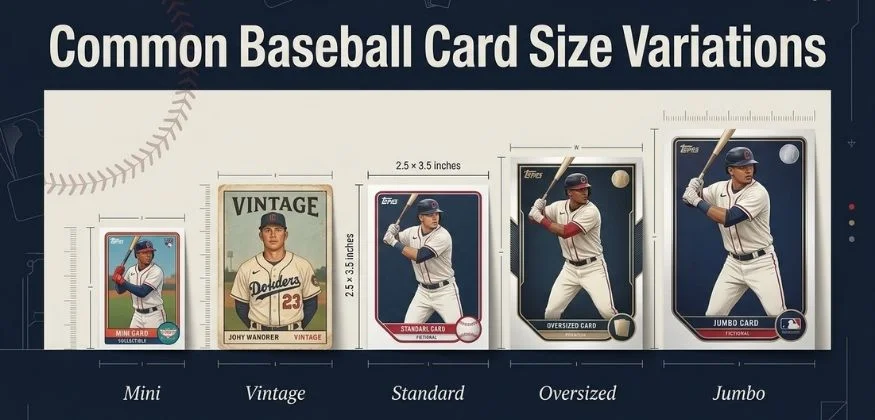
While standard dimensions control the market, collectors occasionally encounter cards in alternative sizes.
Vintage Cards
Older baseball card sets often feature dimensions. They are different from modern standards. Vintage cards can be shorter and narrower. They might be slightly oversized according to the production and manufacturing era.
Oversized Cards
Special promotional cards and limited edition releases. They are significantly larger than standard card sizes. These oversized collectibles often require custom protective cases.
Mini Cards
Some manufacturers produce miniature baseball cards. They serve as novelty items of collector inserts. These cards are smaller than traditional trading cards. But still popular among hobbyists.
Jumbo Cards
Jumbo cards are commonly used for promotional purposes. They can be used for autograph displays, or special collector editions. Their dimensions may vary by manufacturer.
Baseball Card Thickness
Besides the width and height, card thickness is another important measurement. Standard baseball cards typically range between:
12 pt to 20 pt for regular cards
35 pt to 100 pt or more for premium inserts, relic cards, and autograph editions
Thicker cards need larger top loaders and magnetic holders. Thickness should be considered alongside length and width while designing packaging.
Choosing the Right Packaging for Baseball Cards
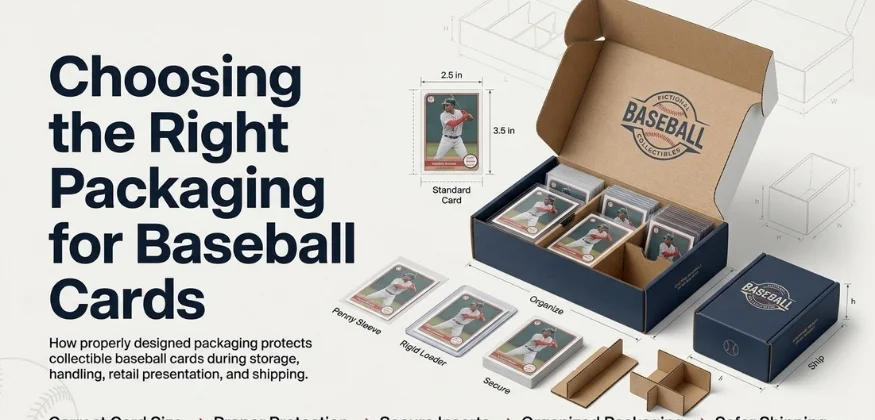
Proper packaging plays an important role in preserving collectible value. Investing in quality packaging helps prevent damage during storage and shipping.
Custom Baseball Card Boxes
Custom card boxes offer:
- Enhanced protection against dust and moisture
- Organized storage for large collections
- Improved presentation for retail sales
- Secure transportation during shipping
- Protective Inserts
Custom compartments, foam inserts, and dividers help cards securely in place and minimize the movement inside the box.
Premium Printing Options
Custom printing can transform packaging into a strong marketing tool for brands selling trading cards. Features such as embossing, foil stamping, UV coating, and custom artwork create a memorable unboxing experience.
Tips and tricks to Store Baseball Cards
To maximize the lifespan of your collection:
- Use acid-free sleeves and holders.
- Store cards in a cool, dry environment.
- Avoid direct sunlight and excessive humidity.
- Handle cards by the edges whenever possible.
- Invest in sturdy storage boxes for long-term protection.
These practices must be followed to preserve card condition and maintain collector value.
Wrapping Up
Understanding baseball card dimensions is important for collectors, designers, and packaging businesses. The standard baseball card size of 2.5 inches × 3.5 inches (63.5 mm × 88.9 mm). It remains the industry benchmark and ensures compatibility with most storage and display products.
Whether you’re creating custom baseball cards, selling trading card products, or building a personal collection, choosing the correct dimensions and packaging solutions. It will help protect your investment and enhance presentation.